
Wednesday, February 24, 2010

Andrew Koenig


Well, it's a sad thing. Andrew Koenig, TV's Boner, is missing. Suffering from depression. At this point, police in Vancouver think he is still in the city but doesn't want to be found. Extremely upsetting, obviously, to his family. His father is Walter Koenig, Ensign Chekov from Star Trek.

Koenig is 41. He played a character called Boner on TV's Growing Pains, a discipline-oriented family sit-com spawned by the popularity of The Cosby Show. I never managed to sit through an episode that I can recall, and my only knowledge of Koenig's character was when I heard a 12-year-old boy call a radio talk show to say that he thought his name was indecent. I wonder what Kirk Cameron thought about it. After he went through his religious conversion, he felt that Growing Pains was sinful. Alan Thicke says he told Kirk that if Growing Pains was "too blue" for him, he should try to put together a show for one of the Christian cable stations.

Andrew Koenig has enjoyed some success. More than I have, certainly. But there have been extremely successful people who have suffered from depression and there have been struggling people who have been happy but frustrated. There's no logic behind it.

Dartmouth Native Vigilantes?

(image via ivygateblog.com)

Last night several of these anonymous signs were posted around the campus of Dartmouth College on the lawns of greek organizations and in front of administration buildings. The text on the sign above, posted at the Psi Upsilon house, reads:
Dear Brothers of Psi U,
You have been charged with representing your brotherhood to Dartmouth as racist and insensitive. Your use of the Dartmouth Indian, which is a caricature of racist stereotypes, as well as the objectification of women on your other shirt send a message to campus that you as an organization are actively disrespecting the feelings of your peers. We are holding you accountable for your actions.
It is time you start doing the same. 
I'll admit that I'm not well versed in the intimate details of the ongoing issues surrounding the Indian mascot at Dartmouth, but I know that it has been a nearly constant struggle for Native students on campus fighting against generations of alumni who support and continue to use the mascot image. In addition to the mascot issues, there have been a series of serious incidents through the years directly targeting or affecting the Native community. Inside Higher Ed published an article in 2006 about some of the incidents, and can be found here.  I can only imagine, given the statement above, that the brothers of Psi U produced some sort of shirt using the mascot.

The Ivygate blog seems to think that these vigilantes are "anti-greek", but I think it's pretty obvious that's not the case, and that there are bigger issues at play here. In addition to the sign above, they also covered the porch of the house with ladies underwear and the words "this won't just go away". While the blog speculates this is a reference to sexual harassment, commenter "vigilante" sets the record straight:

The panties are not anti-sexual-assault or even feminist (god forbid), but rather refer to a Psi U’s response to concerns about the Dartmouth Indian tshirts about people getting their “panties in a twist” and saying the situation will just “go away” if they don’t address it.
The people behind the signs aren’t anti-Greek by any means, just looking to revive dialogue about some recent actions by various organizations that come across as racist/sexist/generally insensitive. These things are consistently dismissed and swept under the rug, so the signs sought to give voice to those who were affected, offended by, and/or silenced by such actions. Accountability and respect of others in the community are the main goals, but at the very least we hope people will start actually talking about these issues rather than blowing them off as usual.
I think this is definitely a voice that needs to be heard, and that the Dartmouth administration's track record of not taking action on issues affecting the Native community and communities of color in general is inexcusable. I hope that these "vigilantes" use this as momentum to keep the movement going and make their voices heard.

I know I've got a few readers from up that way, if anyone wants to give me more information, or wants to write a post about the issues facing Native students on campus, especially surrounding the continued use of the mascot, please don't hesitate to let me know. I am perfectly happy to keep you anonymous. nativeappropriations@gmail.com.

Dartmouth Apologizes for Indian Incidents--Inside Higher Ed (2006): http://www.insidehighered.com/news/2006/11/27/dartmouth

Anonymous Vigilantes Attack Dartmouth Frats with Manifestos, Women's Underwear--Ivygate Blog: http://www.ivygateblog.com/2010/02/breaking-anonymous-vigilante-attacks-dartmouth-frats-with-manifestos-womens-underwear/ 

(Thanks Scott!)

Sachin Tendulkar - I'd like to bat another full 50 overs

sachin tendulkarSACHIN TENDULKAR
sachin tendulkar 200 runsSachin Tendulkar first person to score 200 in ODI Cricket match

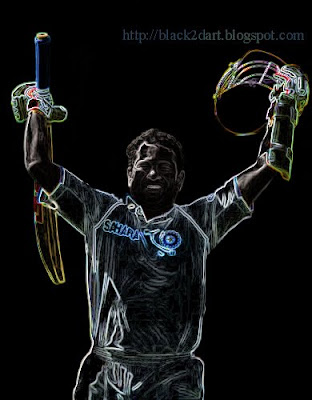
sachin tendulkar master blasterSachin Tendulkar - Master Blaster
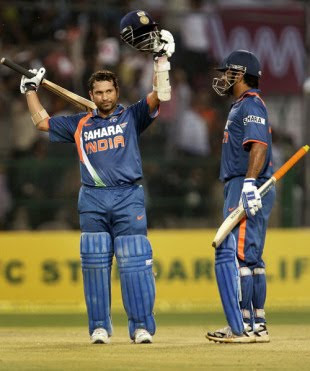
sachin tendulkar and mahendra singh dhoniSachin acknowledging the crowd after completing his double century.
Indian captain M.S.Dhoni along with the Little Master
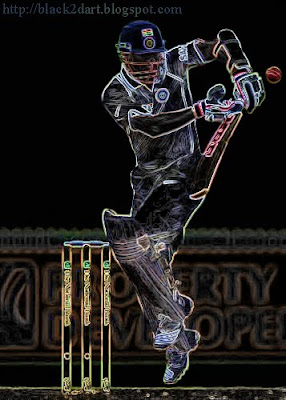
sachin tendulkar indian cricketerSachin Tendulkar, who broke the record for the highest individual ODI score, overtaking Saeed Anwar and Charles Coventry on his way to the format's first double-hundred, has said his ability to bat the entire 50 overs was a testament to his fitness after having played the game for more than 20 years.

"It feels good that I lasted for 50 overs, a good test of my fitness. I'd like to bat another 50 overs at some stage and see that the fitness level doesn't drop," Tendulkar said after his effort helped India take a unassailable 2-0 lead in the series. "The ball was coming onto the bat and I was striking the ball well. So when everything falls into its place, it feels nice. It was one of the innings where I felt I was moving well. Since I was timing the ball well, I could be more aggressive and put pressure on the bowlers."

Tendulkar, while dedicating his feat to the people of India, credited coach Gary Kirsten for the team's success in both forms of the game after the debacle in the World Cup in the Caribbean. "I've enjoyed various challenges; after the 2007 World Cup things have looked different and I'm enjoying the game," he said. "The credit also goes to Gary [Kirsten], he has really held the team beautifully. It's about togetherness and playing for each other. You see during the practice sessions that Gary himself trains as hard as anyone else, or probably harder than anyone else as he's the one giving us practice all the time."

Tendulkar said he sensed an opportunity to break the record and reach a double-century when he had gone past 175 in the 42nd over. The record eventually came in the 46th over, and the 200 in the 50th. "When I was near 175-180, I thought I could get a 200 as there were quite a few overs left," he said. He added that he would prefer his achievement to be upstaged by an Indian. "I don't play for records, I play for enjoyment and play with lots of passion. That's how cricket started. I didn't start playing cricket to break all the records; it's happened along the way. The dream was to play for India and do my best.

"I don't think any record is unbreakable. Records are made to be broken. I hope that if this record is broke, it's done by an Indian."

This was India's third-highest score in ODIs, and Tendulkar said the 400-mark would not have reached if not for some big hitting by Yusuf Pathan and MS Dhoni. "I thought a target of 340-350 would be a good one, but Yusuf Pathan and MS Dhoni came in and hit the big shots and cleared the ropes consistently and helped us pass 400."

Tendulkar added that India were not relaxing despite having put up a mammoth score, for they were aware South Africa were the only team to have chased down a target in excess of 400. "This was the team that chased 434 against Australia. So we didn't get complacent and told ourselves that we had just got through the half-way stage by scoring 401. And what we did in the second half was extremely important. We were aiming at getting early wickets and putting them out of the game."

Dhoni, who witnessed Tendulkar surpass the record from the other end, said: "I think one of the best innings, you can say. It's always good to be on the other side, watching him score 200 runs. When he is tired and can't play the big shots, he was very clever to use the pace of the bowler and it's very difficult for the bowlers as they don't know where exactly to bowl."

India lost Virender Sehwag early, and Tendulkar was assisted in three sizable stands where runs came at a brisk pace, with Dinesh Karthik, Yusuf and Dhoni. "Once Viru got out, it was important to get some kind of a partnership going. They [Tendulkar and Karthik] went on with their innings, and they set a platform after which we were sure we would get 350-plus which would be a difficult target," Dhoni said. "Yusuf was sent up the order and with the talent he's got, he can be a great asset to the side."

Yusuf scored a quickfire 36 and was particularly lethal during the batting Powerplay, while Dhoni proved destructive at the death, bludgeoning 68 off 35 in a century-stand with Tendulkar in just 53 balls. "I have changed my batting a bit, but the situation demanded that kind [attacking] of innings," Dhoni said. "The ground is a small one, and we were a bit worried about the dew factor. But once they lost 3-4 early wickets, it was difficult for them to get back into the game."

For South Africa and their stand-in captain Jacques Kallis, it was a case of the basics gone wrong. "The toss was quite vital. Our basics were just weren't good enough today. We were outplayed," Kallis said. "We lost wickets at crucial stages, our basics let us down. A fantastic innings by Sachin; he took advantage of some good conditions and he played superbly. We let ourselves down in some areas."

source
Indigenous Olympics Link Roundup Part 2


Here are a few more links examining the Indigenous presence in the games!
The argument I’ve been hearing is that with the “inclusion” of First Nations in the games marks the NEW start to a world wide relationship with us as Aboriginal Peoples living in Canada.  The term “unprecedented involvement” has been thrown around quite a bit and I wonder what that means exactly?  Are we involved because we danced in the Opening?  Are we involved because there is an Aboriginal pavilion at the games where “the world” can see us perform, sing, dance, rap, etc.?  Are we involved because we had to be because the Games were taking place whether we liked it or not and to be “a part” of it made more sense than not; at least we get to represent ourselves right?
To me, Canada had a chance to REALLY change the way the world sees “US” and how THEY (Canada) sees “US.”  I can’t help but go back to the UN Declaration on the Rights of Indigenous Peoples and how Canada has participated in adopting (actually, NOT adopting) it.  Currently 143 countries have signed it and 4 haven’t.  The countries that haven’t signed are Canada, the US, New Zealand and Australia.  Australia has recently signed and New Zealand and the US are currently said to be close to signing. That leaves Canada.  To show TRUE appreciation for it’s Aboriginal Peoples and while on the world stage – could Canada have done more to let people know where they stand?  Should they have?  I mean, we did get to “dance” at the Olympics, but shouldn’t we ask for more?
Irniq is put off by the Olympic logo because of its human form. Its fat legs and outstretched arms make it look a little like a hockey goalie, and the head has a hint of a smile. Irniq says his people rarely stacked rocks to resemble humans.
"It's a symbol of the fact that someone may have, um, committed suicide or someone may have murdered somebody at that spot," he says.
If people are interested in looking at an example of an inukshuk that's not associated with death, he says, they should look at the flag of Nunavut, which features a more traditional inukshuk.
Alano Edzerza, owner of Vancouver’s Edzerza Gallery and the acclaimed artist who carved the 10-meter native art mural at Vancouver's GM Place (an arena to be used for the Olympics), together with ASICS, has unveiled their ground-breaking collaborative design for the Netherlands Olympic team uniform. 
The designs were unveiled at a fashion show hosted by ASICS at Arnhem’s Olympic Papendal Hotel and Conference Centre (Papendallaan 3, Arnhem, NETHERLANDS). The event was streamed via a feed and is available on demand at www.edzerzagallery.com and on YouTube at http://www.youtube.com/watch?v=0-YYmIlJdrQ
(Thanks Marjorie, Ryan, and Leon!) 

Groupola.com - start saving!


Groupola.com is a new website with very convincing offers. It promises discounts of up tp 90% if enough people sign up for the offer. Currently on groupola.com, there is a great offer on Virgin Balloon flights in London, a really great offer for new clients only at a top London hairdresser's and restaurant and show deals for those in London. But the website has also a great list of cities catered for a a large list of offers for other cities. For instance, a great 60% discount on a make over in Cardiff or Pole Dancing lessons in Manchester! Wow, this new site sounds like lots of fun at a bargain price. Make sure to bookmark to benefit from this groundbreaking group purchasing site, promising up to 90% off retail price.

Tuesday, February 23, 2010

Anarkali Churidar

Anarkali ChuridarAnarkali Churidar

FAMOUS ART QUOTES, MUSIC QUOTES, PAINTING QUOTES, FILM MAKING QUOTES, PHOTOGRAPHY QUOTES:

It is frequently the tragedy of the great artist, as it is of the great scientist, that he frightens the ordinary man.
~ Loren Eiseley, The Night Country, 1971

He who sings scares away his woes.
~ Cervantes

Dodging and burning are steps to take care of mistakes God made in establishing tonal relationships.
~ Ansel Adams

I think a photography class should be a requirement in all educational programs because it makes you see the world rather than just look at it.
~ Author Unknown

Monday, February 22, 2010

Indigenous Olympics link roundup


As promised, I've tried to pull together some informative links/articles/blog posts about the Indigenization of the winter Olympics. This is by no means exhaustive (not even close!) so if anyone has more, please send them my way!

(AK note: this is a fantastic, well researched, well written piece, I wanted to quote the whole thing here! definitely a must read.)
 Some have found the cartoonish Olympic marketing imagery to be a mockery of native traditions.  For example, critics have argued that the 2010 Olympics committee has edited and re-packaged native culture — which also has been ripped out of its traditional contexts. The Committee is highlighting Arctic indigenous imagery — yet Vancouver, the centre of the Games, is a temperate city.  Arctic indigenous peoples did not live there — or on the nearby Whistler and Cypress mountains, where some Olympic events will be held. Other indigenous populations who did live in that area of British Columbia also are not represented in the marketing iconography.
The Olympics branding denies noteworthy differences among native groups spread across these areas. Passing theatrical gestures to native peoples during the open ceremonies could be considered to be more respectful, but Olympics marketers otherwise have been mixing up North American native traditions into a soup-like caricature. Natives have been consistently oppressed, but the various peoples who are considered to be native (in some way, or to some degree) certainly are not ‘all the same.’ Tacking Arctic imagery on to Vancouver-area Games implies that there is only one native essence (in North America, if not beyond this continent).

"So when I watched the Olympics opening ceremonies after the original broadcast I did feel proud that Native peoples were being included and celebrated in the production. I also am happy that it is the first time Indigenous people have been recognized by the International Olympic Committe as official host partners in any games.

But I can't help feeling like it's a little token. There is not doubt that Canada doesn't want to share it's long legacy of genocide toward the Native people of this country. This is why many Native people are asking for attention to our issues today, especially our stolen lands. The effects of this colonization are very much alive today. We have so many health, poverty, education, social issues which have many people living in third world conditions right here in Canada, in our backyards."
During the games, the pavilion, an 8,000-square-foot building, will include entertainment provided by Native performers. There will also be plenty of aboriginal food and merchandise for sale. The pavilion will not be the only place in town with an aboriginal presence. In fact, there is no escaping aboriginal involvement and it will be rather prevalent in almost all aspects. For example, the games’ official logo is named Ilanaaq the Inunnguaq; ilanaaq is the Inuktitut word meaning friend.

Also, the games’ three official mascots – Miga, Quatchi and Sumi – were inspired by traditional First Nations creatures. Miga is a mythical sea bear, Quatchi is a sasquatch, and Sumi is an animal spirit. The athletes who win a medal will take home some hardware based on the designs of artwork of Vancouver-based aboriginal artist Corrine Hunt. And there are scores of other aboriginal designed products that are part of the games’ merchandising program.


To some, this means the Olympics are being held on stolen native land. But Phillip says if the Four Host First Nations want to allow the games on their land, that's their right. Not that he's happy about it. His organization has kept its distance from the Olympics, and he's even refused to take part in the tribute to native culture in Friday night's opening ceremony, which he calls "Disneyesque." "I don't think it's proper for me to stand there and hold hands with government officials and be part of the misrepresentation of the well-being of our people," Phillip says.
Canadian aboriginals eager to promote their culture at the upcoming Winter Games on their ancestral lands lamented on Wednesday that some "authentic First Nations" souvenirs were made in China, Italy or Thailand. These include native art and traditional clothes.
Tewanee Joseph, director of the Four Host First Nations, representing area aboriginals, says it is not a problem. "The design was created by authentic First Nations," he told AFP. "The Four Host Nations created the whole aboriginal mark of the Games and we are truly authentic aboriginal people."

There are so many more, but I didn't want it to be too overwhelming. Maybe I'll do a few more roundups throughout the week.

(Thanks Nancy, Sociological Images, Lisa Charleyboy, and anyone else who gave me links!)